
Flat handover report: what to record to avoid a deposit dispute
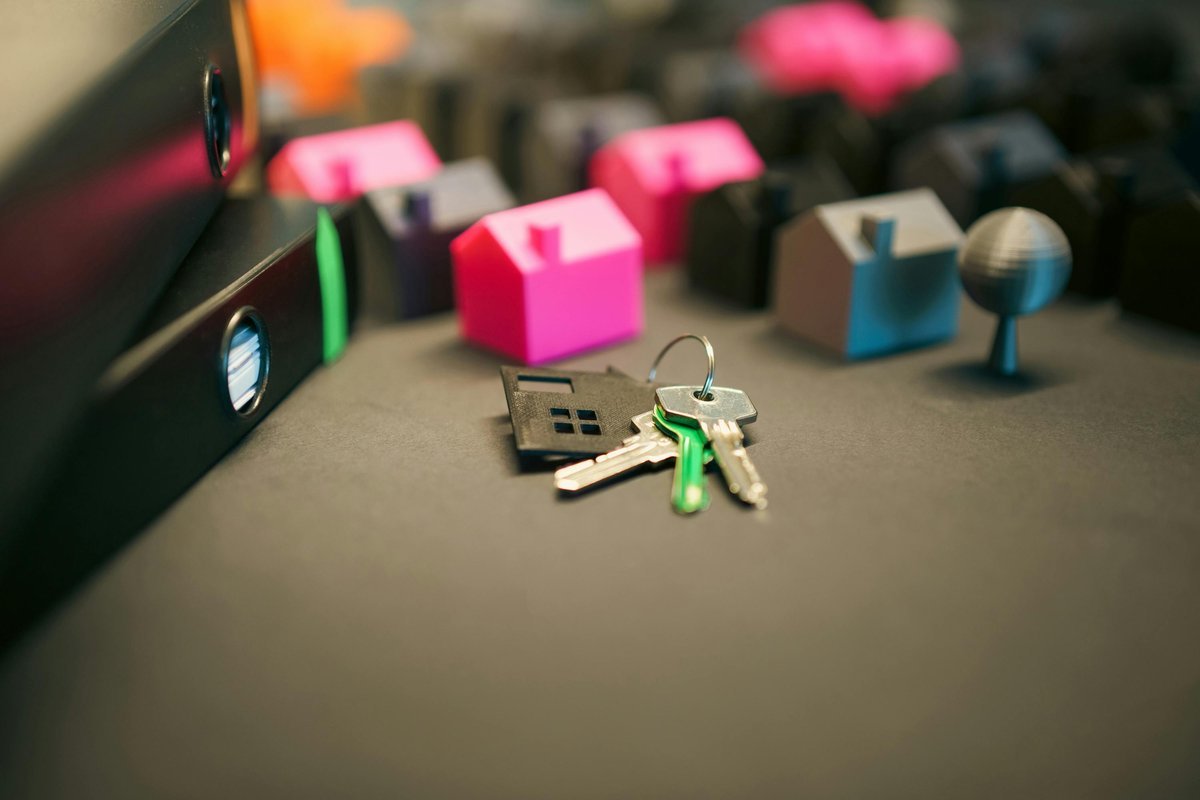
The deposit is the only security a landlord can reach for without going to court. That is exactly why settling it makes so much noise at the end of a tenancy. Every decision to withhold money comes down to one comparison: the condition of the flat on the day it was handed over against its condition on the day it was returned. No solid flat handover report, no comparison. What you get instead is an exchange of accusations. Below I set out what exactly has to end up in this document so that after a year, or after three years, it is still possible to establish who is responsible for a given fault.
Why the deposit so often becomes the subject of a dispute
The parties almost never argue about whether the damage exists at all. A scratched worktop, a discoloured grout line, a broken roller in a wardrobe door - both sides can see it, nobody pretends otherwise. The row starts with the question “when did it happen”. The tenant says the flat was already like that. The landlord remembers differently. And memory after two years is poor evidence.
Without a description of the initial condition, every scratch and every stain is one person’s word against another’s. And it is not about who is right, but about who can prove their position. The burden of showing that the damage arose during the tenancy lies with whoever wants to withhold money from the deposit. If the documentation says nothing about the condition of the door on the day the keys were handed over, a deduction for replacing it will be hard to defend. The report is what settles the later argument about when a deposit can be kept.
On top of that there is the time gap that sits at the root of the whole problem. The deposit is settled at the end of the agreement, while the evidence is created at its start - often several years earlier. On signing day the report looks like a formality to tick off, because both sides have the flat fresh in their minds. The value of that piece of paper only shows up when nobody remembers anything any more.
Landlords come back to the check-in report months or years after signing, usually in a hurry, right before returning the deposit. What counts then is legibility and whether anything was left out. Nobody cares about an elegant layout. A report written in headline style, along the lines of “general condition good”, will not help in any conversation. One that lists specifics room by room ends the discussion in a few minutes.
The second observation is availability. Even the most detailed report loses its point if after two years it sits in a different binder than the photos, and the photos have dissolved somewhere in a message archive. The set has to be reproducible as a whole, because the settlement rests on comparing two conditions, not one.
What the report must contain - the formal part
The formal part is short, but it is what pins the description of the flat’s condition to a specific legal relationship. Without it you have a loose note about a flat, not an annex to the agreement. Start with the date and time of the handover. The time is not overkill - with meter readings and the settlement of the final month it can decide whose consumption a given day belongs to.
Next, the full address with the flat number, and if the flat comes with a storage unit or a parking space, their designations too. The report should point directly to the tenancy agreement it relates to: the date it was concluded and the parties. When you extend a tenancy with the same tenants, add a note that the document relates to the new agreement and that the condition of the flat is carried over from the previous check-out report.
The next block is the details of the parties and of the people present at the handover. We list the landlord and the tenant, and next to them anyone who actually takes part in the process: an attorney acting under a power of attorney, an agent, a property manager, a co-tenant. If the flat is received by someone other than the person signing the agreement, their presence and the basis on which they act must be clear from the document.
Keys deserve a separate entry, because missing keys are one of the more common reasons for deductions. We write down the number of sets of front door keys handed over, keys to the letterbox and the storage unit, remote controls for the gate and the barrier, cards or fobs for the entryphone, and any keys to a utility room. The number of items, stated outright. Because “a set of keys” means nothing when the flat comes back.
Finally money and signatures. The report should state the amount of the deposit, the form of payment and the date it was credited to the landlord’s account. Both parties sign the document, ideally on every page - then nobody can later question whether all the sheets are there. When the report is created in an app, that role is taken over by an electronic confirmation with a recorded date and the person accepting it.
Meters and utilities: the entry that closes the settlement question
Meter readings take up the least space in the report and carry the most evidential weight. Utility consumption is measurable, so a dispute about it ends straight away - provided the initial reading was recorded correctly. The thing people forget: note not only the value but also the serial number of each device. The serial number confirms that the reading relates to this meter and not the one next door, and it catches any replacement of the device during the tenancy.
Electricity is split by tariff if the meter runs on a two-zone system. A single combined figure for the day and night tariffs makes it impossible to recalculate the bill later. Water is similar: cold and hot have separate meters, often several of them on different risers, and a heat meter settles heating in its own unit.
- Electricity - day tariff reading, night tariff reading, meter number
- Gas - reading in cubic metres, meter number
- Cold water - the reading from each meter separately together with its number
- Hot water - the reading from each meter separately together with its number
- Heat meter or heat cost allocators - reading and device number
- Date of reading - identical to the date of the handover
A photo for every reading, showing the display and the serial number at the same time. A figure copied out by hand is only one party’s assertion. A photograph of the device settles the matter without discussion. With meters that cycle through fields on the display, take a series of shots covering all the zones.
The report should also settle who is party to the contracts with the utility providers. If the meters stay with the landlord, the tenant pays for utilities in a settlement with them, and the owner is liable to the provider for any arrears. Planning to transfer the contracts? Put in the deadline and state who files the application. Also note the state of settlements with the housing community or the cooperative as at the handover date: whether the advance payments are up to date, how much they are and when the next annual settlement falls, which may bring an additional charge or a refund.
A room by room description of the flat’s condition
The most effective method is also the simplest: a separate section for each room, and in it the same set of items checked every time. Walls, floor, ceiling, window joinery, doors with handles and locks, lighting, sockets and switches, radiators with valves. A fixed list protects you from missing something that nobody happened to think about in this particular flat and that turns out to matter most when it comes back.
The whole difference lies between an evaluative entry and a descriptive one. “Good condition” is a useless entry, because it does not say what was actually seen. Instead we note facts: “scratch approx. 10 cm on the wardrobe door in the bedroom, left panel”, “discolouration of the parquet by the window in the living room, approx. 30 by 20 cm”, “cracked lampshade in the hallway”. A description like this defends itself. It needs no interpreting.
Tip: when describing a fault, give four pieces of information - the room, the item, the type of damage and the approximate size. That is enough to point to that specific scratch among several similar ones a year later and to tell old damage from new.
The bathroom and the kitchen - here you have to put in more work than anywhere else, because that is where most of the damage reported at the end comes from. In the bathroom we check the silicone around the bath and the shower tray, the grout, the condition of the taps, whether the traps drain and are watertight, the toilet seat fixings, whether the ventilation works, and any signs of damp on the walls and ceiling. In the kitchen: the worktop together with the edges by the sink, the front and the seals of the extractor hood, whether the extraction works, the condition of the sink, the trap underneath it, and the drawers and cabinet hinges.
The last item in this section is faults reported during the handover itself. If the tenant points out something to be repaired, the report should contain not only a description but also the deadline by which the landlord undertakes to fix it. An entry like this works both ways: it protects the landlord from being charged for pre-existing damage, and the tenant from taking over a flat with a defect that nobody later wants to remember.
Contents: an inventory that really does protect the deposit
A furnished flat needs an inventory just as careful as the description of its technical condition. Appliances and electronics are listed with make, model and serial number, with a note on whether they work and whether warranty documents and manuals are being handed over. The serial number rules out swapping a device for a cheaper item of the same make - without it such a swap is practically impossible to prove.
Furniture - the number of items and any visible damage. A sofa, a table, four chairs, a chest of drawers, a two-door wardrobe, each entry separately, noting scuffs, stains or looseness in the structure. Plus the things that are easy to forget and that can trigger a dispute: net curtains and curtains, curtain rails, blinds, mirrors, rugs, pictures, chandeliers. Note their condition, because cleaning the curtains and the rug can be a separate item in the deductions.
Small items can be covered collectively, but always with a count. An entry like this is enough: pots 4 pcs, pans 2 pcs, dinner plates 6 pcs, cutlery set for 6 people, bedding 2 sets, towels 4 pcs, vacuum cleaner, ironing board, clothes airer. Nobody is going to charge a tenant for one broken mug. But half the crockery missing when the flat comes back is a real amount in the settlement.
A separate matter: what the tenant is liable for and what simply wears out. Ruining the washing machine through neglect is damage. A breakdown after seven years of use is the ordinary end of the device’s life and goes on the owner’s account. The same with a mattress, a pan coating or seals. Recording the age and initial condition of the equipment in the report makes this assessment much easier at the end of the tenancy. The same end-of-tenancy check is a good moment to count the returned keys and plan changing the locks after departure before the next tenant moves in.
Finally something that sounds technical but saves the most time: numbering the entries. When every item has its number, the check-out report comes down to a reference to the number plus a short note about the change in condition. There is no need to describe anything from scratch or to guess whether it is the same chest of drawers.
Photographic documentation: a standard that holds up
Photos supplement the description, they do not replace it. A folder of photographs on its own says nothing about what the parties treated as a fault, and text alone without photos is hard to verify years later. The standard that works has two layers: wide shots and close-ups. Photograph each room from two opposite corners, so that the frames cover the whole surface of the walls, floor and ceiling. Plus a close-up of every fault listed in the report.
The date a photo was taken has to be clear from the file metadata or from the system the photograph ended up in. A caption typed in by hand under an image proves nothing - it can be added at any time. For the same reason it is better not to send the documentation through channels that compress files and strip EXIF data. The photo then loses its most valuable piece of information, the moment it was taken.
The next thing is linking the material to the content of the document. Loose photos in a phone gallery are, a year on, a collection of similar frames, and nobody will find that one scratch on the wardrobe door among them. A photograph assigned to a numbered entry in the report works the other way round: it leads straight to the description and lets you compare two conditions without guessing. Repeat the same set of shots when the flat is returned - from the same corners, in the same order. Then the comparison is unambiguous. The same habit of putting everything on paper pays off even earlier, when you reserve a flat with earnest money and agree in writing on what happens to it if either side pulls out.
In tenanto the photos and the report entries stay with a specific flat and agreement, so once the tenancy ends you are not searching through a mail archive or working out which folder related to which flat. With one flat let for three years that is simple convenience. With several flats and tenants coming and going it is a condition of settling things efficiently.
Tip: take photos in good daylight and with the ceiling lights on. Dark frames shot with flash blur scratches and discolouration, and those are exactly what tends to be disputed later.
Returning the flat and settling the deposit step by step
It is worth handling the return of a flat in the same order every time, for every agreement. The sequence below organises the whole process and lets you close it in a single visit.
- Reading and photographing all the meters together with their serial numbers.
- Walking through the flat following the check-in report, room by room, in the same order.
- Comparing the photos from the handover day with the current condition, entry by entry.
- Checking the number of keys, remote controls and cards returned against the record from the handover.
- Establishing the deductions together with the amounts and the basis for each of them.
- Signing the check-out report and paying out the deposit less any deductions.
Point five is the hardest, or more precisely the line between fair wear and tear and damage. It decides whether a deduction is due at all. Traces of normal use of an item as intended fall on the owner: a worn runner in the hallway, faded paint by the south-facing window, marks from furniture on the carpet. Damage is something that goes beyond normal use - a torn-out door frame, a burnt worktop, a flooded floor, holes from wall plugs in the tiles.
Every deduction should point to three things: the entry number from the check-in report, a description of the change in condition and an amount based on the real cost of the repair. An amount given off the top of the head, by eye, is the most common reason a dispute escalates. The basis should be an invoice, a cost estimate or a quote from a contractor. Something you can put on the table in front of the other side.
A check-out report signed by both parties formally closes the matter. And if the tenant refuses to sign? Note that in the document together with the reason given and the date, and keep the rest of the documentation from that day.
Tip: prepare the deposit settlement in writing, itemising every entry - even when you are returning the full amount. A statement confirming that there are no deductions closes the matter just as effectively as one with deductions.
Summary and FAQ
A handover report works under three conditions: it is specific, complete and available at the end of the tenancy, not only on the day of signing. Each of them is decided at a different stage. Specificity depends on how the condition is described, completeness on the checklist used, and availability on where the documentation sits for the whole term of the agreement.
The whole structure rests on three pillars. First, a room by room description of the flat’s condition, driven by facts instead of judgements. Second, meter readings with serial numbers and photos of the devices. Third, photographic documentation linked to numbered entries in the report, taken to the same pattern when the flat is handed over and when it is returned. Gaps in any of them only show up when the deposit is settled, when it is too late to fill them in.
Keeping reports, photos and agreements in one place shortens the whole procedure to comparing two documents describing the same flat at two moments in time. Tenanto lets you run one flat this way on the free plan, with no time limit - the documentation from the day the keys were handed over waits exactly where it will be needed at the return, however much time has passed. For an academic year, plan handing a flat to a student back from September.
Is a handover report compulsory?
It depends on the form of tenancy. With the occasional lease (najem okazjonalny) and the institutional lease (najem instytucjonalny), the regulations refer directly to handing the flat over by way of a report, so the document is part of the required procedure. With an ordinary fixed-term tenancy the act imposes no such obligation and the parties may hand over the flat without a report. The practical effect is the same in both cases: without a description of the initial condition the landlord has nothing to show that the damage arose during the tenancy, and so no basis for a deduction from the deposit. It pays to draw one up regardless of whether a regulation requires it.

